

Introduction – Best Free Photo Editing Software for Mac
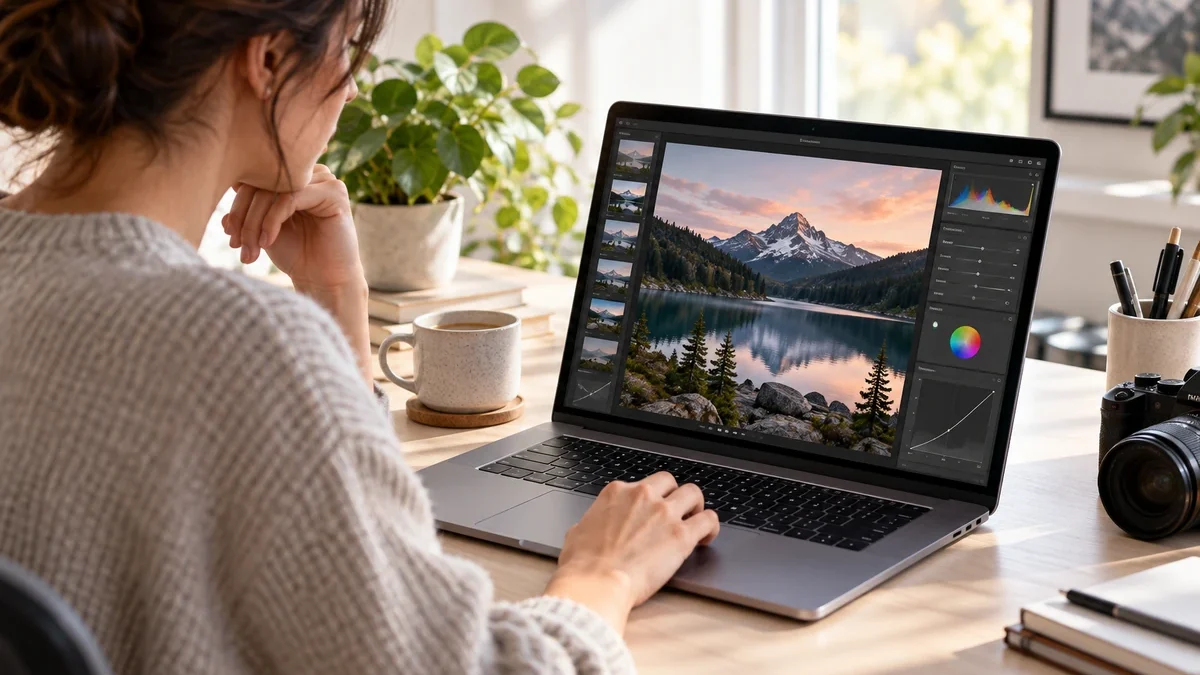
Photo editing options for Mac come either with the built-in applications, on the browser or in an independent (desktop) application. Which one is right for you is mainly a matter of the kind of editing you want to do.
If you just need some basic adjustments the Photos that is shipped with macOS might already be all you need. For a wider variety of filters and batch processing tools PhotoScape X provides a Mac version. For a more comprehensive editor for retouching and putting an image together GIMP (also for macOS) can be used or Photopea if you want to work in the browser.
Table of Contents
Decide what you need to edit
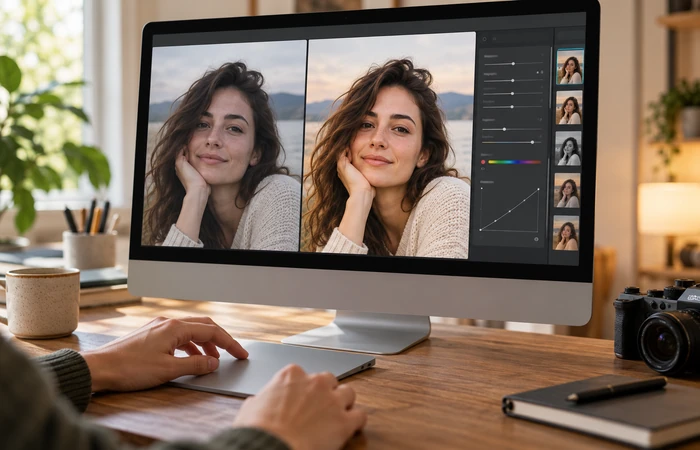
Make a list of edits you do most often. Basic editing: cropping, straightening, and exposure control. Remove a background, merging photos, editing layers and masking intricate selection are more advanced.
Consider these questions:
- Are you seeking an app that functions offline?
- Lack of layers or masks?
- Do you work on just a few photos at a time, or many?
- Facing a decision to open a RAWfile?
- Now that you had had a chance to interact with the system, is an unfamiliar system a hard-to adapt interface?
You can quickly narrow the possibilities by these answers.
Free Mac photo editors to consider
Apple Photos for everyday adjustments
Photos is enabled on the Mac already and is capable of doing basic edits such as cropping and changing the style of an image. This is useful when you want to quickly enhance a photograph instead of having to learn a new program.
Its biggest advantage is its simplicity. It may not provide the workflow you need for complex composites or for special retouching. Use it if your objectives are simple and transition to an external editor if you hit a obvious obstacle.
PhotoScape X for a range of photo tools
PhotoScape X can be used on a macOS computer and has an editor, cutout tools, batch processing, collage making and many other image utilities. This large list might come in handy if you want to do multiple simple jobs within the one program.
The free version and Pro version are two different versions so be sure that it is part of the program before using it. There are a lot of functions offered in the interface of the editor that could become overwhelming for just a few basic editing adjustments. The website issued with the Mac version and list of features: PhotoScape X.
GIMP for deeper control
GIMP is free (software) for macOS, Windows and Linux. GIMP‘s tools allow photo retouching, image composition and image creation. It is a good alternative if you want to do more control over selections, layers, and adjustments than a basic photo app provides.
GIMP may be more time-consuming to learn than a basic editor. If you decide to use it, start with a simple task like cropping and exposure correction, then study layers and masks when necessary. The official summary explains the reason for GIMP and the platform availability: About GIMP.
Photopea when you prefer a browser
Photopea is an online editor that works in a web browser. It provides the tools for resizing as well as editing. Photopea supports layers, masks, and editing files such as PSD. Its tutorials introduce the workspace and tools of the editor: Photopea introduction.
Since it is a browser-based editor, you do not need to download and install any desktop editor. Photopea says that editing works on your device. Always double-check the privacy info and your browser setup before editing private or sensitive pictures.
How to choose
Photos are text editors when obtaining do little editing without having to have an additional editor installed. PhotoScape X is an editor if the range of combining images function with the batch and collage tools will squeeze into the schedule. GIMP is the good choice for refined editing and making compositions. Photopea is the editor if it should be used in a browser having layer support and wider file compatibility.
No need to stick to a single editor for everything. You could even use an inbuilt application for something more minor… and a desktop editor for more involved work. Keep your original photos unchanged so you can return to them if an edit goes wrong.
Check export quality before finishing
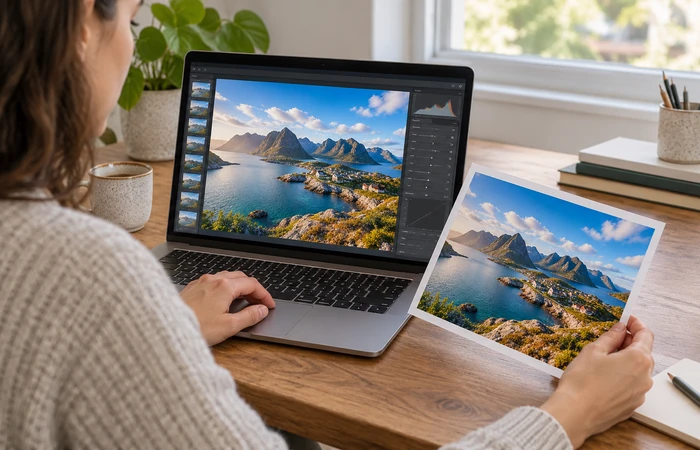
A favorite photo in the editor may export dull or soft, or too highly compressed. Save it as a separate file, select an output format appropriate to the destination, and examine the exported file at full size.
Determine where the photo is to be used. For a website it should be a file smaller in size. For printing to ensure correct dimensions and resolution. Save a project file so later you can make adjustments.
Explore the free photo editing software guide for options beyond Mac-specific tools.