



Table of Contents
Introduction
Payroll is undoubtedly one of the business processes where precision is of utmost importance.
Employees should be paid correctly and on time, while the business will be concerned with the tax obligations, deductions, records and reporting
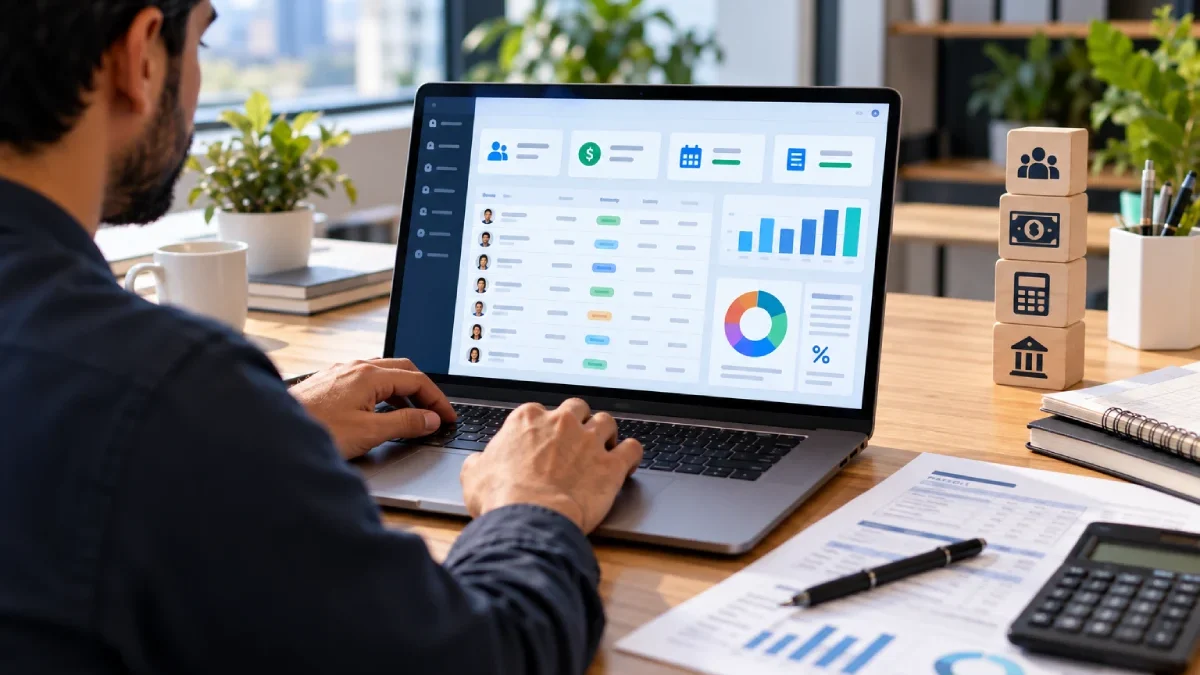
Small Business Payroll software can take much of this burden of work away.
What Does Payroll Software Do?
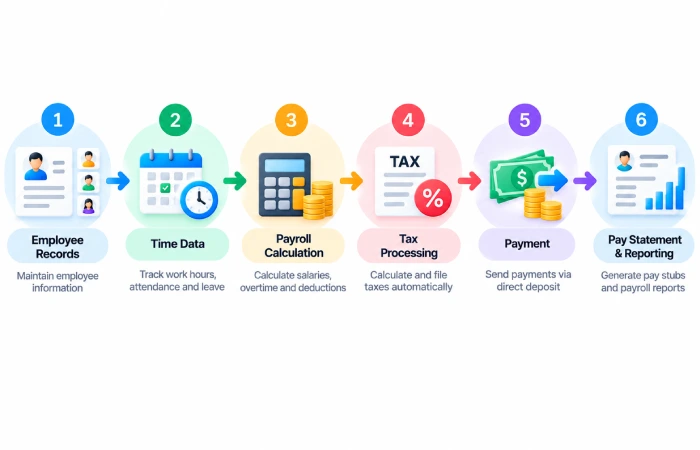
A payroll management system can help with:
- Employee records
- Payroll calculations
- Direct deposit
- Tax calculations
- Tax filing
- Pay statements
- Contractor payments
- Benefits
- Time tracking
- Payroll reports
Exact features vary depending on the provider, the plan, location, and the number of employees.
Payroll Software Options for Small Businesses
Gusto
Gusto is built with payroll and HR in mind for small, growing companies.
The current payroll features it offers are payroll processing, tax administration, new employee onboarding, benefits and HR tools etc. For comparison of the year 2026, Gusto is speculated to have additional Payroll competitors like Rippling, QuickBooks Payroll, ADP, OnPay, Paychex, Square Payroll and Patriot.
QuickBooks Payroll
If QuickBooks accounting is already being used in the business, QuickBooks Payroll can be of benefit to the business.
The biggest advantage is the integration with the broader accounting flow.
Patriot Payroll
Patriot31 targets small and mid-sized businesses and provides payroll packages with direct deposit, payments to employees and contractors, filing services, and integrations.
OnPay
OnPay is an alternative for small businesses and companies that calculate multi state payroll.
It all depends on where the employees are situated and which tax and HR services need to be used.
Important Payroll Features
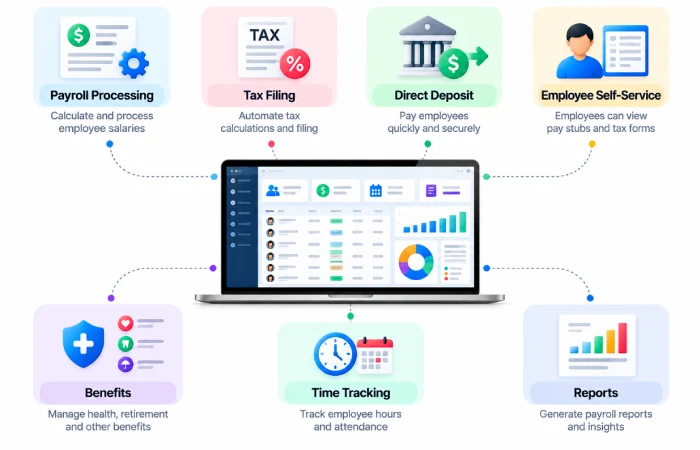
Payroll Processing
Employees should be paid fairly and correspond to their working time and wages.
Tax Filing
Seek out the level of help that is suitable for the locations where your enterprise employs individuals.
Direct Deposit
Direct deposit has the advantage of simplifying the administration of regular payroll.
Employee Self-Service
Employye portals enable the workers themselves to access pay paypallys and manipulate certain data.
Benefits
Emerging businesses might require linkages for health insurance, a 401k program, or similar benefits.
Time Tracking
With hourly employees, integrated time tracking reduces data entry for payroll.
How to Choose a Payroll Management System
Firstly. Put simply, where.
Payroll rules are different in every country, state, local jurisdiction and the mettle of the land of dawn. A good system in one country might not work in another place.
Then consider:
- Number of Employees
- Employees and contractors payments
- Tax filing requirements
- Benefits
- Time tracking
- Accounting integration
- HR features
- Support
Very small businesses might only want a basic payroll package but those who are growing should look for payroll, HR and benefits.
Common Mistakes
-Don’t treat payroll just like any other productivity app.
Common mistakes include:
- Picking out software without local tax support?
- Becoming confused and inputting wrong employee data
- Overlooking payroll deadlines
- If by assuming it is not necessary to provide review
- What if I remember something I need to verify, there‘s no way to check up on.
- Purchasing HR capabilities that are not required by the business
Always check with a qualified professional regarding the payroll and taxes in your jurisdiction.
FAQs
What is the best payroll software for small business?
Gusto, quick book payroll, Patriot, on pay, ADP, Paychex are few of the payroll platforms with varying strengths and prices along with different pricing plans.
Can payroll software calculate taxes?
Tax calculation and filing services are usually offered by many payroll platforms for an additional charge, depending on the plan one has and the location.
Can payroll software pay contractors?
Some services currently cater for contractor payments as well as employee payroll.
Does payroll software replace an accountant?
It can handle the administration aspects of payroll but business owners may still require professional advice on tax and wages issues and more complex employment situations.
Final Thoughts
The best small business payroll software will be very pro-location, small business number of employees, payroll complexity, and what other software you have.
Main areas of focus such as accurate payroll processing, tax support, employee records, direct deposit, integrations, support, etc.
Given the fact that payroll is a matter for the employees and for compliance, opt for a reliable system with local support that can be upheld rather than an elaborate screen with a long list of superfl uous features.