




Introduction – Best Project Management Software for Small Business
Many has many on going projects.
Without a system, tasks get stuck in email threads, deadlines are missed, and your team does not know all the things that are assigned to them.
Brings all your work together Bring everything-Tasks, co-Workers, files, Discussions and progress -together in one.
Table of Contents
What Is Project Management Software?
Project management software: Project management software is used by businesses to organize and track work.
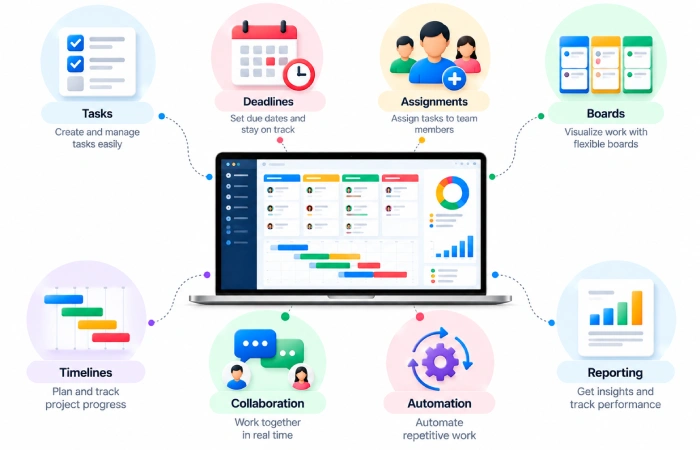
Common features include:
- Tasks
- Deadlines
- Assignments
- Project boards
- Timelines
- File sharing
- Team collaboration
- Progress tracking
- Automation
- Reports
There is a multitude of existing project-management tools. Some of the tools that call for a significant part of the latter have to do with ClickUp, Asana, Monday.com, Trello, Notion, etc.
Project Management Software Options
Asana
Asana is used to organize and manage team work on project.
It features a SME edition with project tracking, workflow automation, workload visibility and AI-based work management.
Works well for teams managing marketing, operational, product related work, and repetitive projects.
ClickUp
ClickUp is a powerful all-in-one task management platform that includes: tasks, docs, dashboards, collaboration and more.
A good choice for businesses that require a wide range of project functions.
Trello
Cards and boards are the Trello implements of work.
Visual Kanban This is especially helpful for smaller teams of people who want a simple tracking of work from one phase to another.
Monday.com
Content is visualized with custom dashboards, workflows, and task management.
This may be handy for teams who want flexible visual workflows.
Features to Compare
Task Management
Also tasks shall be simple to generate, assign, prioritize and observe.
Deadlines
The upcoming and overdue deadlines should be visible.
Collaboration
Attempts to reduce scattered communication including: comments, files, mentions and notifications.
Project Views
The same work can be viewed in a number of ways, through screens, lists, calendars, timelines and Gantt styled views.
Automation
Automatization. This can help by minimizing repetitive job like around task assignment or reminders.
Reporting
Between reports can provide indications about progress of project, what has been added to the load of workload and the deadline and work which has been done.
How to Choose Project Tracking Software
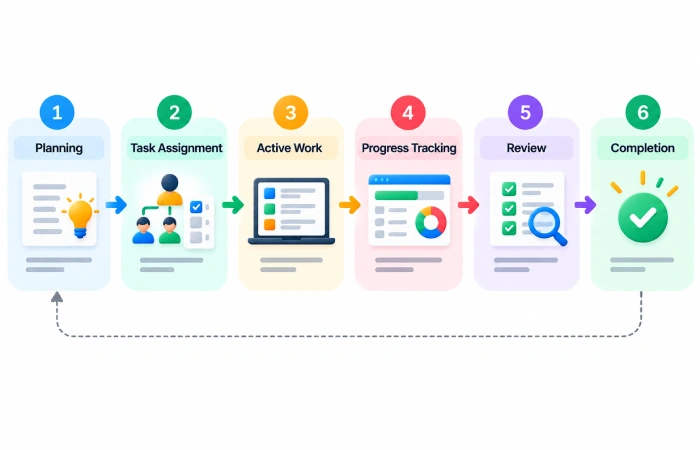
Consider the number of team members and the number of complexities involved.
A team that is small and managing straightforward projects may only require a board and task list.
An expanding business might need dependencies, timelines, workload management, reporting, integrations, and also more granular permissions.
Select on general will of directions very simply of workflow instead of a number of features.
Common Mistakes
Avoid:
- Project overload
- Superseding task categories you never included.
- Offloading the software to serve solely as a file store
- De facto – separating project publications from the system
- No one “owns” the work
- Selecting an overly complex tool
The aim is to visually organize work.
FAQs
What is the best project management software for small businesses?
Asana, ClickUp, Trello or Monday.com are also available if you want to go with other solutions with other management projects approaches. It directly depends on the team workflow.
Is project management software useful for a small team?
Yes. Even a modest group can use well defined ownership of tasks, schedule, and transparency of the project status.
Can project management software replace email?
Can cut down on emailing which takes a lot of time , but it isn‘t likely to eliminate email from the business as I‘m sure they will still use it for communication with the outside world.
Final Thoughts
What is the best project management software for small business seems also to be make the work much more visible and manageable.
Begin with Tasks, ownership, deadlines and communication. Then include Timelines, automation, reporting and more sophisticated workflows as the business evolves.
One easy-to-use project management system that everyone adopts is better than a complicated system nobody uses.