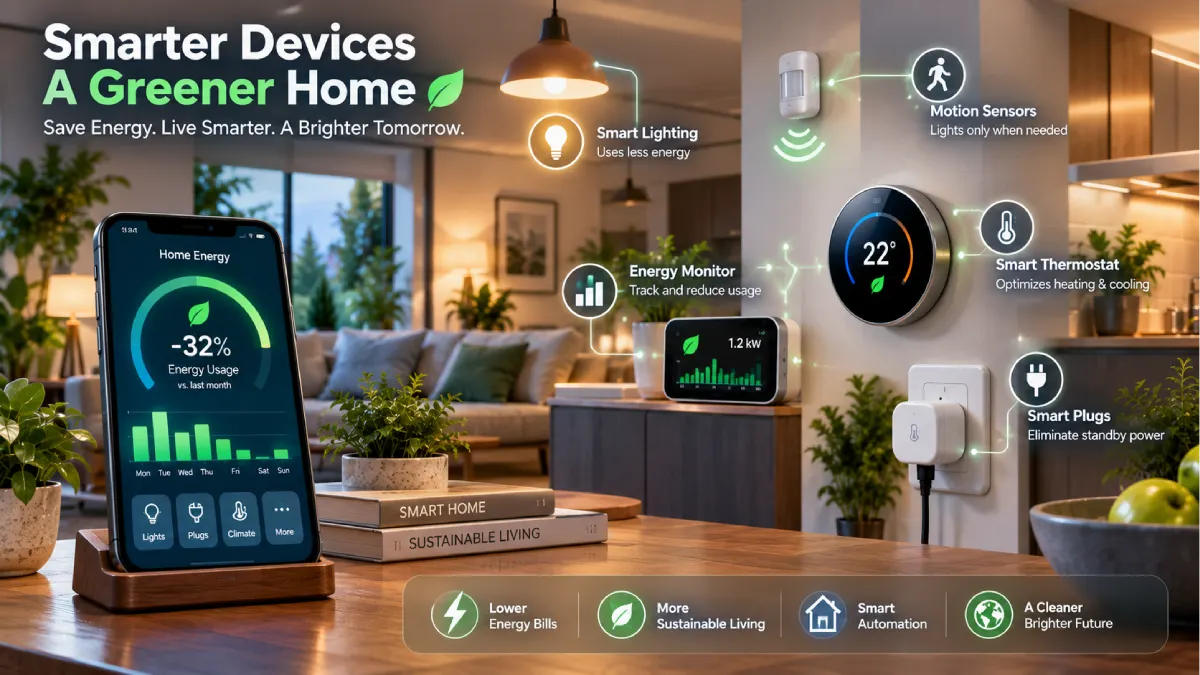



Best Energy-Saving Smart Home Devices
It is also a tight grasp over our every move.
Certain linked appliances may additionally enable you to comprehend your home‘s energy consumption and simplify the regulation of electrcity-using appliances.
You could program a smart plug to control the flow of electricity to a device, or install a smart electricity monitor so you could see the energy consumption of your home. You could even control your heating and cooling with a smart thermostat and a compatible system.
Overall, the smart home energy saving gadgets that provide the most benefit will not cut your electric bill just because they are smart. Instead they will save you money in the value, control and information they supply.
This guide describes the most common types of home energy-saving technologies, how they work, and how to select the appropriate system.
Table of Contents
What Are Energy-Saving Smart Home Devices?
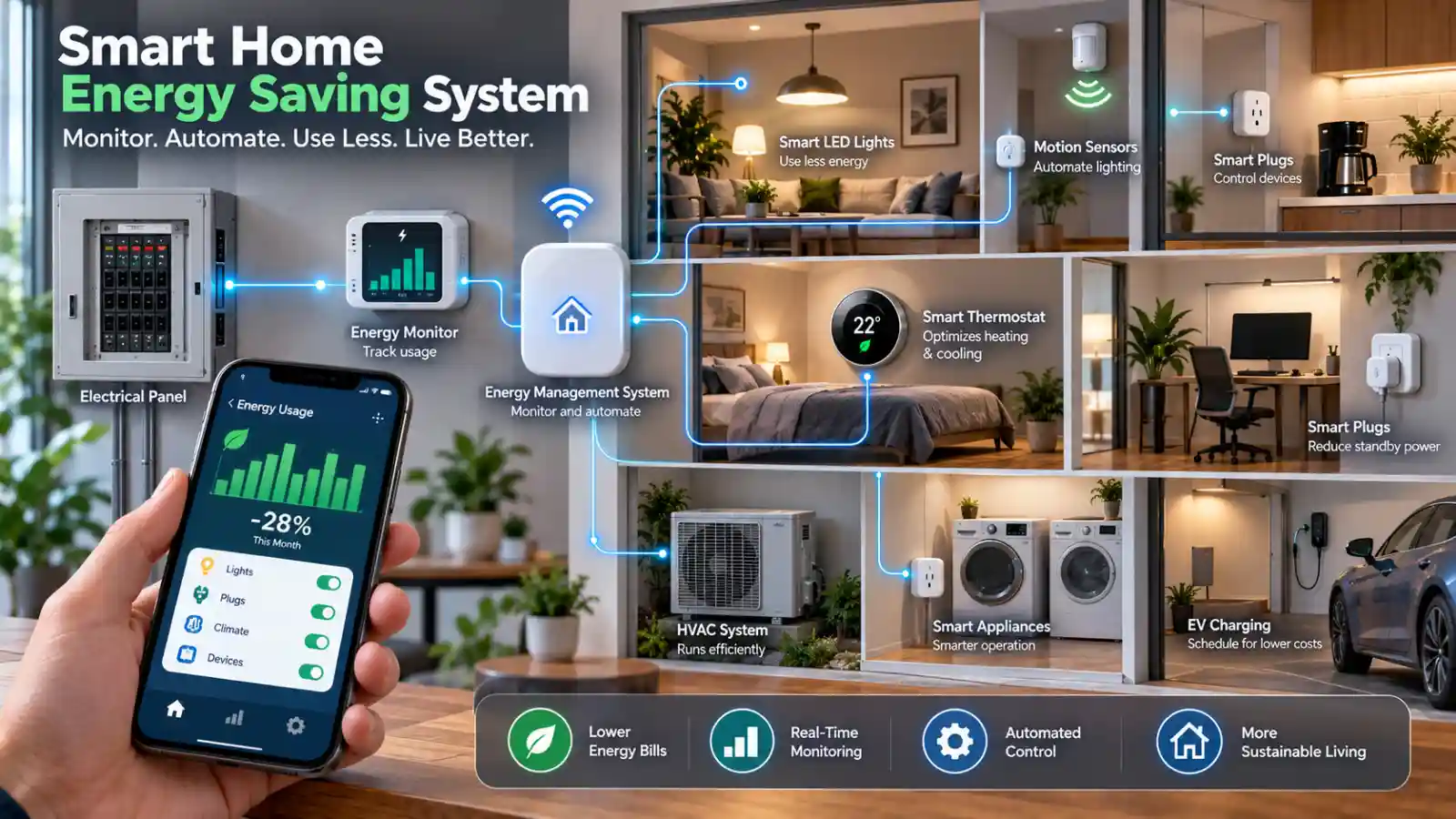
Energy efficient smart home products can be connected products that enable the monitoring, management, scheduling or automatic control of energy use.
Common examples include:
- Smart plugs
- This is an indicator of smart power: strength of leader in a dispute.
- Smart electricity monitor show the consumption of electricity used in house/living unit. More details about energy monitors are going to discuss in the next section of this report.
- Smart thermostats
- Smart lighting
- Home energy management systems
- Smart appliances
- Energy-monitoring hubs
The devices operate in various fashions.
A few are in charge of measuring the energy consumption.
Some are remote controlled.
Another method is a cycle when the machine is running.
Generally, a system which includes monitoring and actually automating is the most handy.
How Smart Devices Can Help Save Energy
Smart devices can offer a range of assistance:
Scheduling
A smart device can switch off something when it is not required.
Remote Control
It is possible that you are able to turn some equipment which is compatible with the mobile phone OFF on your phone, rather than letting it stay ON when not required.
Monitoring
Monitoring energy usage can also highlight which devices or sections are consuming the highest amounts of energy
Automation
Sensors, scheduling and smart home routines can help alleviate the need for manual operation.
The savings you get will probably be less than this, as they will vary with how you use the devices and equipment you control, your house and your electricity consumption habits.
Best Smart Energy-Saving Devices
1. Smart Plugs for Energy Saving
The easy to use, energy saving smart plugs are the simplest products.
The smart plug is the intermediate that is plugged in between an outlet and an appropriately designated appliance, which it can control either remotely or according to a schedule based on the particular model.
Potential uses include:
- Lamps
- Fans
- Entertainment equipment
- Chargers
- Small appliances
For example:
Expected time → Switch off associated device
This will prevent eligible devices being switched on when not required.
A smart plug in itself does not turn an inefficient appliance into an efficient one.
This is because the big advantage is control.
How to Use a Smart Plug Efficiently
Select equipment that uses automatic switching between ON and OFF appropriately.
For example:
Each night, 11 PM → Switch off the living-room entertainment array
or:
On each weekday morning → Switch on an appropriate device
Do not use smart plugs with devices which it is not recommended by the manufacturer to switch on or off remotely.
Always observe the electrical rating of the plug and of the appliance it is designed to power.
2. Smart Power Monitoring Devices
There are smart power monitoring devices that can monitor and measure usage.
Depending on the product, they may show:
- Current power usage
- Energy consumption over time
- Usage history
- The approximate energy cost:
- Device-level consumption
It can help you determine if there is equipment in use that may be using more energy than it should be.
For instance you might find out that your old fridge is using up loads more energy than you ever expected
With monitoring, you get information
And then you will use this information to modify it.
3. Smart Electricity Monitor
With the use of a smart electricity monitor you can get a more general idea of electricity usage inside your house.
Depending on the system the level at which monitoring takes place can be the circuit, meter or whole home.
A whole-home monitor can help you understand patterns such as:
Morning → Increased use
The afternoon leads to a drop in consumption.
Evening → High usage
Being able to see these shapes can enable you to determine where investments in saving energy would best be put.
The dimensions, and the required installation fittings/hardware, will vary depending on the product.
Certain whole-home monitoring systems can be installed close to the electrical panel; consider professional installation.
4. Smart Thermostats
Smart thermostats make regulating your heating and cooling easier.
Features may include:
- Temperature schedules
- Remote control
- Automation
- Temperature sensors
- Away settings
- Smart home integration If you are interested in home automation, I can help you. I am considering investing in smart home features such as letting my refrigerator take inventory of what I have, and having a central computer control lights, heating, and air conditioning.
Heatinbg and cooling can account for much household energy usage and so efficient control systems can be important.
On the flip side, energy saving is not necessarily provided by a smart thermostat.
The result depends on factors such as:
- HVAC efficiency
- Climate
- Insulation
- Temperature settings
- Home size
- Usage patterns
Have a look at our Best Smart Thermostats guide for an indepth buying guide.
5. Smart Lighting
Using timers, sensors, or remote control allows intelligent lighting systems to reduce wasted lighting.
For example:
No motion registered -> turn off hallway light
or:
Sunrise → turn off some selected outdoor lights
It also helps you control a set of lights together.
See also our Best Smart Lighting Devices article for more details.
6. Smart Sensors
Energy saving automation can be enabled by sensors.
By incorporating motion and/or occupancy sensors the lights or associated devices can turn on and off when a space is occupied.
For example:
Room has been visited→ lights on
Empty room → Lights out
This would be helpful for a location where the people who live there often forget to turn off the lights.
The sensors will only be really effective if they are properly situated and wired up to robust automation rules.
7. Home Energy Management Devices
A home energy management device offers the convergence of the automatic and the monitor.
Depending on the system, they may provide:
- Total home energy monitoring
- Appliance-level information
- Automated controls
- Energy-use reports
- Smart scheduling
- How do other devices integrate
These devices are often more expensive than an equivalent smart plug and can be more complicated.
Makes more sense for people that want as much info about their usage or as much automation as possible.
Devices That Can Reduce Electricity Bills
There is not one single device that will result in a cheaper electricity bill.
However, consider which devices can assist you in minimizing unnecessary consumption.
Examples include:
| Device | Potential Benefit |
|---|---|
| Smart Plug | Pre-select appropriate appliances |
| Energy Monitor | Determine high usage of electricity |
| Smart Thermostat | Control heating and cooling |
| Smart Bulb | Program and schedule lights |
| Motion Sensor | Only turn on the lights as necessary |
| Smart Power Monitor | Track the activity of each device |
| Home Energy System | Supervise and automate more aspects of the home |
Your savings would be determined by how much energy you used before, and what changes you‘ve made.
Smart Plugs vs Energy Monitors
These solve disparate issues.
Smart Plug
A smart plug enables you to turn on or off whatever appliance it is attached to.
Energy Monitor
An energy meter will tell you how much electricity is being consumed
These two approaches can be combined.
For example:
Energy monitor detects a high energy usage → Smart plug controls a reasonable device.
That combination could be more convenient for energy management.
Standby Power and Smart Plugs
Other electronics consume minimal amounts of electricity when seemingly turned off.
This is also sometimes known as standby or idle power.
Smart plugs can solve this for the appropriate devices by switching them off on a set schedule.
You should not regularly unplug equipment that requires power to remain safe, be updated, or operate correctly.
Adhere to manufacturers’ instructions at all times.
Energy-Efficient Smart Gadgets
Not all smart products are energy efficient products.
A gadget can be smart just by connecting to wifi or the app with a much large step down in use of electricity.
When shopping for energy-efficient smart gadgets, ask:
Is this device a way of using less energy, helping me to see energy, or is it just a helpful extra bit?
It‘s good to know that difference so that you‘ll not buy more things which has less effect on your electricity.
How to Build an Energy-Saving Smart Home
There is no requirement to have a full energy management system in an instant.
A simple setup could be:
Step 1: Begin by connecting the first smart plug.
2: Integrate smart lighting where it is applicable.
Step 3: Use motion sensors in some regions.
4: If your heating and cooling system is compatible, consider adding a smart thermostat.
Step 5: Install an energy monitor to understand usage.
Step 6: Develop the easiest habits based on what you really do
This step-by-step approach gives you an opportunity to see where it really matters to implement any changes.
Energy-Saving Smart Home Example
Picture a household that keeps their lights on and the television, stereo, etc. on all the time.
They could create:
Motion sensor -> Hall lights on
No movement → Hallway light off
11PM Entertainment smart plug turns off
Away mode → Corresponding switches turned off
Schedule→ thermostat adjusts temperature
The aim is not to fully automate everything.
The objective is to eliminate unnecessary energy consumption and in the meantime not make the house difficult to operate.
How to Choose Energy-Saving Smart Devices
1. Identify the Problem
Are you trying to:
- Reduce excessive lighting?
- Control appliances?
- Make sense of electrical usage?
- Heating/cooling: (To do)
- Is the whole house to be watched?
Begin by stating the problem.
2. Check Compatibility
Check to see if the device will integrate with the smart home platform you are already using.
3. Check Installation
A smart plug, on the other hand, is typically a great deal simpler to setup then the system that monitors your home electricity.
Know what your getting before you purchase.
4. Check Connectivity
Consider the needs of the Wi-Fi, Thread, Zigbee, Bluetooth, and/or other protocols.
5. Check Energy Monitoring Features
If monitoring is your primary purpose, ensure that the output really does deliver the measurement you require.
6. Check Subscription Costs
Additional features like cloud storage, advanced analytics and other services might require the user to pay a subscription.
The long term expense can be contrasted with
Smart Home Energy Monitoring
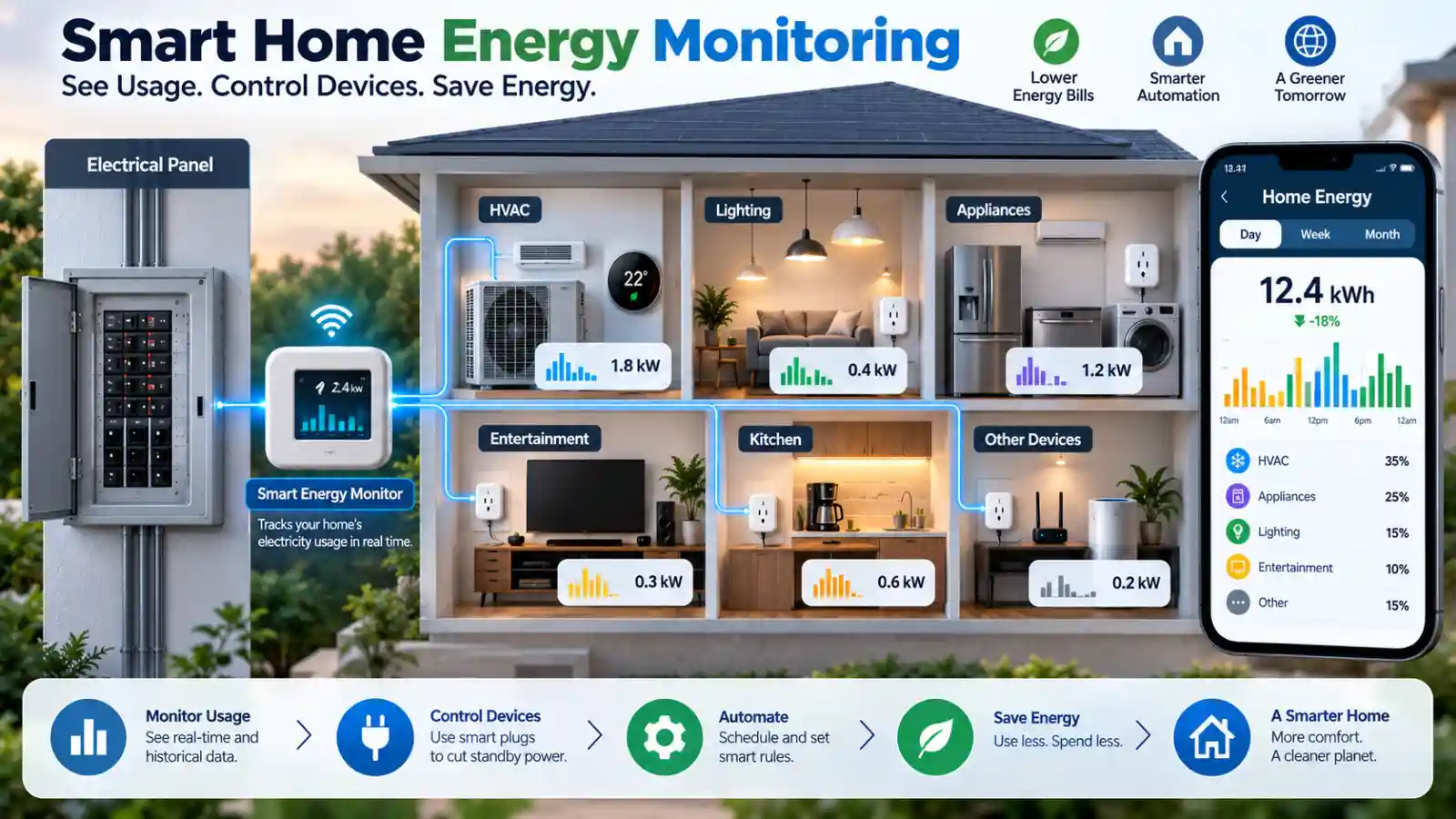
Energy monitoring provides a worthwhile service by turning energy use into information you can act upon.
For example, instead of simply thinking:
My electricity cost is very expensive.
You can investigate:
Which area in my house is consuming the most energy?
That can result in more rational choices.
In my experience, savings will likely be made through a small modification in use of a large appliance or HVAC unit rather than micro-managing a few small devices.
Smart Home Energy Saving Mistakes
Buying Smart Devices Without a Plan
Adding devices without being clear on what they‘re designed to improve will inevitably lead to the higher costs with no significant saving benefits.
Assuming Every Smart Device Saves Energy
Connectivity is not an energy efficiency measure.
Ignoring Major Energy Users
Managing a tiny light bulb will produce negligible effects compared with optimizing the functioning of a large electricity user.
Using Too Many Automations
Automation can be a pain if the routines conflict or turn everything on or off unexpectedly.
Ignoring Device Ratings
Before pluging the appliances into smart plugs and other control devices check its electrical rating.
Forgetting Installation Requirements
Whole home monitoring device might need electrical installation.
Utilize a professional when needed.
Simple Energy-Saving Smart Home Checklist
Before buying a device, ask:
- What energy problem do I want to tackle?
- Does this device help to monitor or adjust this issue?
- Does this work with my smart home setup?
- Is it required to have Wi-Fi or some other kind of connectivity?
- Does it need a hub?
- Professional installation required?
- Are there subscription fees?
- Is there a measurable reason to expect energy savings?
- Is the device suitable for the appliance or circuit involved?
FAQs About Energy-Saving Smart Home Devices
Which smart home devices can help save energy?
Smart plugs, smart thermostats, smart lighting, motion sensors and energy monitoring devices can all manage energy consumption, if used appropriately.
Do smart plugs reduce electricity bills?
A smart plug doesn‘t cut back on electricity you use. It is useful because you can set on a timer or turn it off the appliance that would just stay on.
What is the best smart electricity monitor?
The best monitor for your home depends on if you want whole-home or device-by-device information, how you plan to install it, and which data features you prefer.
Can smart thermostats save electricity?
Help you control heating and cooling with timers and automation. The amount saved differs depending on your heating or cooling system, home, climate and usage.
Are smart home devices worth it for energy saving?
They can be worthwhile provided they fix a particular energy use problem that offers savings greater than the cost of purchase and installation.
Final Thoughts
The most energy-efficient smart home gadgets are those that help you understand or manage significant energy consumption points.
Smart plugs are an easy place to begin. Energy monitors can tell you where the electricity is being used. Smart thermostats can control the heating and cooling, and smart lighting and motion sensors can turn off any lights that are not needed.
Do not buy the device just because it is advertising as “smart”.
Is there a direct link between the product and the energy problem you intend to address?
As with Wi-Fi, begin on a small scale, get a handle on how much you use, build useful automations and then grow your setup to meet your real needs.
For the entire smart home reference, check out our Best Smart Home Devices.